
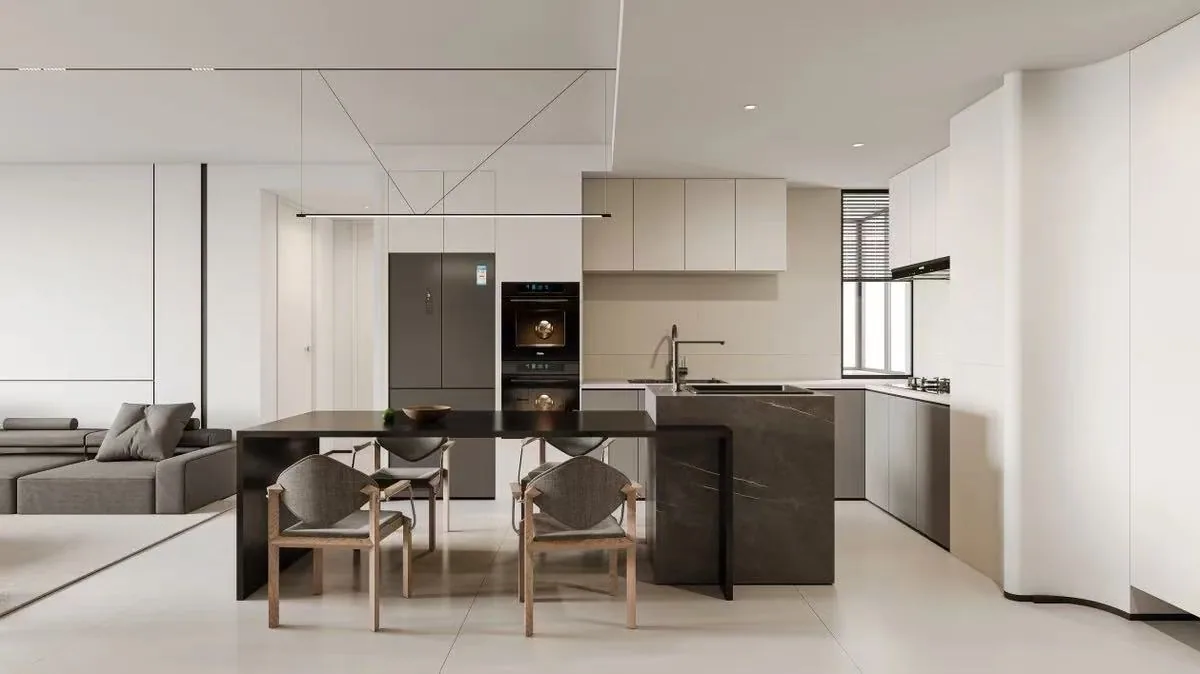
Most Johor Bahru homes cook heavy at home, so a wet + dry kitchen split just works. Here's how we plan the two zones so each does its job.
Why split wet and dry at all
Malaysian cooking — frying, sambal, heavy wok work — throws out grease, steam and strong smells. A wet kitchen keeps all that in one enclosed, easy-to-clean zone, while the dry kitchen out front stays clean for light prep, the fridge, coffee and show. If you cook proper meals at home, the split saves your nicer cabinets from a daily greasing.
What goes in each
- Wet kitchen: the hob and wok burner, sink, heavy storage, gas, and a hood that actually pulls
- Dry kitchen: fridge, tall units, a breakfast or island counter, coffee corner, light prep
- Placed where you actually stand: pantry pull-outs and the bin
- A doorway or glass partition between the two to keep smells in the wet zone
Materials for each zone
The wet kitchen takes the abuse, so we use moisture-resistant plywood or board with sealed edges, easy-wipe laminate doors, and stone or solid-surface tops that shrug off oil and heat. The dry kitchen can go for the nicer finish — acrylic or a woodgrain laminate — because it stays cleaner. Spend on durability where the wok is, spend on looks out front.
Fitting it into a JB layout
Not every home has room for a full second kitchen. In condos and smaller terraces we often do a compact wet zone at the back or yard, and a slim dry counter inside. We'll measure your space and show you a 3D layout so you can see how the two flow before anything is built.
Recommended next step
Planning kitchen cabinets in Johor Bahru? View our Kitchen Cabinets service, see a living–kitchen pass-through project we built, or WhatsApp us your photos and floor plan for a free site measurement.